
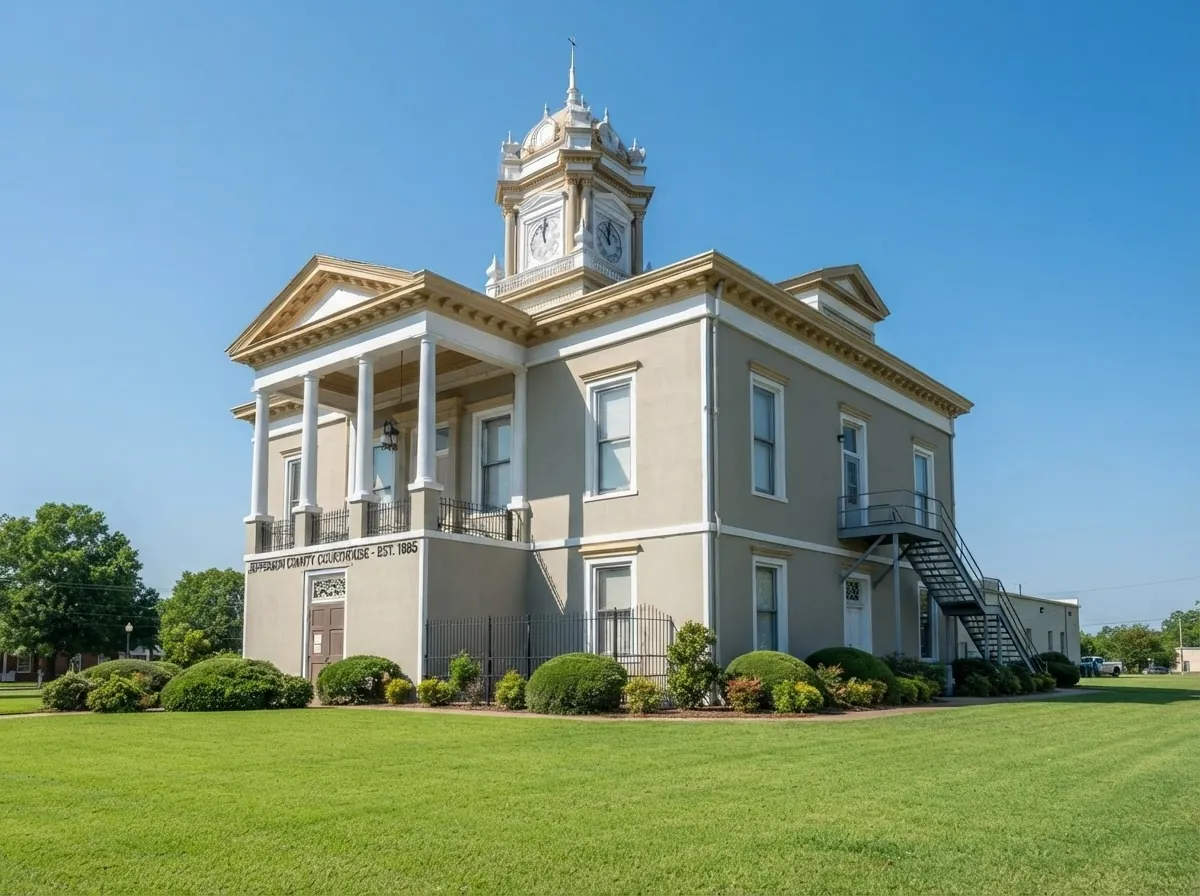
Court records in Burke County, North Carolina, are maintained by the Clerk of Superior Court and can be accessed through online tools, official court portals, and the clerk's office. BurkeCourt.us can help you find publicly available court record information for Burke County. Additional access points include the North Carolina Judicial Branch county page, the state's obtaining court records guide, and the Burke County Clerk of Superior Court's office in Morganton.
Burke Court System Overview
Burke County is part of North Carolina's Judicial District 25, which serves Burke and Catawba counties. The district operates under the General Court of Justice, which includes both Superior Court and District Court divisions. Superior Court handles felony criminal cases, civil cases above $25,000, and appeals from District Court. District Court covers misdemeanors, infractions, civil cases up to $25,000, small claims, family law, and juvenile matters. Magistrates within the District Court division issue warrants, set bail, hear small claims, and perform other judicial functions. All Burke County court operations are based at the Burke County Courthouse.
Courts Serving Burke County
| Court | Address | Notes |
|---|---|---|
| Burke County Superior Court | 201 South Green St, Morganton, NC 28655 | Felonies, major civil, appeals from District Court |
| Burke County District Court | 201 South Green St, Morganton, NC 28655 | Misdemeanors, civil under $25,000, family, juvenile |
| Burke County Magistrate's Office | 201 South Green St, Morganton, NC 28655 | Small claims, warrants, initial appearances |
| U.S. District Court – Western District of North Carolina | Charles R. Jonas Federal Building, 401 West Trade St, Charlotte, NC 28202 | Federal civil and criminal cases; Burke County falls within this district |
| U.S. Bankruptcy Court – Western District of North Carolina | 401 West Trade St, Charlotte, NC 28202 | Federal bankruptcy filings |
Contact the Burke County contact directory on the NC Judicial Branch site for current phone numbers for the Clerk of Superior Court and individual court divisions.
What Types of Cases Burke County Courts Hear
Burke County courts handle a wide range of case types across the Superior Court, District Court, and Magistrate divisions:
- Criminal: Felonies, misdemeanors, infractions, DWI
- Traffic: Moving violations, license-related offenses
- Civil: General civil litigation, contract disputes, personal injury, landlord-tenant
- Small claims: Civil disputes up to $10,000
- Family law: Divorce, custody, child support, domestic violence protective orders, paternity
- Probate and estates: Decedent estates, guardianships, conservatorships, trusts
- Juvenile: Delinquency, undisciplined youth, abuse/neglect/dependency
- Special proceedings: Adoptions, name changes, foreclosures
District Court Cases in Burke County
Burke County District Court hears misdemeanor criminal cases, infractions, civil cases where the amount in controversy is $25,000 or less, and all family law and juvenile matters. District Court judges also hear appeals from magistrate decisions in small claims and summary ejectment cases, providing a trial de novo (a completely new trial). Cases arrive in District Court through criminal citations, civil complaints filed with the clerk, or petitions in family and juvenile matters. A District Court judge presides, and cases are typically assigned based on the court calendar for that session. Felony cases receive a first appearance in District Court before being transferred to Superior Court following a finding of probable cause.
Magistrate Court Cases in Burke County
Burke County magistrates handle several key functions within the District Court division:
- Small claims: Civil disputes up to $10,000 under N.C. General Statute § 7A-210
- Summary ejectment: Eviction proceedings
- Criminal process: Issuing arrest warrants, search warrants, and criminal summonses
- Initial appearances: Setting conditions of release and bond for criminal defendants
- Worthless check cases: Hearings on returned checks
- Civil marriages: Performing marriage ceremonies
Magistrates are available after regular business hours and on weekends for emergency matters such as warrants and domestic violence protective orders. Either party in a small claims or summary ejectment case may appeal the magistrate's decision to District Court within 10 days for a new trial.
Family Law, Probate, and Juvenile Matters in Burke County
Family Law
Divorce, child custody, child support, equitable distribution, domestic violence protective orders, and paternity actions are heard in Burke County District Court. North Carolina requires a one-year separation period before absolute divorce. Divorce certificates can be obtained from NC Vital Records or the Clerk of Superior Court in the county where the divorce was filed.
Probate and Estates
The Clerk of Superior Court in Burke County serves as the judge of probate, overseeing decedent estates, guardianships, conservatorships, and trust matters. Estate files and special proceedings records are maintained at the courthouse. These records are generally public, though some guardianship records involving minors or incapacitated adults may have restricted access.
Juvenile
Juvenile delinquency, undisciplined youth, and abuse/neglect/dependency cases are heard in Burke County District Court. Juvenile records are confidential under North Carolina law and are not available through public court record searches. Contact the Clerk of Superior Court for questions about access to juvenile case information.
How Cases Move Through the Burke County Court System
- Filing or initiation: Criminal cases begin with a warrant, citation, or grand jury indictment. Civil cases start with a complaint filed with the Clerk of Superior Court. Family and probate matters begin with a petition.
- Assignment: Cases are placed on the appropriate court calendar — criminal, civil, family, or juvenile — based on case type and court division.
- Initial hearing: Criminal defendants have a first appearance (arraignment) where charges are read and bond is addressed. Civil cases receive a scheduling or case management order.
- Pre-trial phase: Parties exchange discovery, file motions, and may engage in mediation or plea negotiations. North Carolina requires mediated settlement conferences in many civil cases.
- Trial or resolution: Cases are resolved by plea, bench trial, jury trial, settlement, default judgment, or consent order.
- Post-judgment: Criminal cases may involve sentencing, probation, or appeal. Civil cases may involve enforcement of judgment or appeal to the North Carolina Court of Appeals.
Court Administration, Local Rules, and Public Access in Burke County
Burke County courts are administered under Judicial District 25. The Senior Resident Superior Court Judge and the Chief District Court Judge oversee court operations for the district. A Trial Court Administrator manages day-to-day administrative functions.
- Local rules: Local rules for Judicial District 25 govern scheduling, motions practice, and courtroom procedures. Check the Burke County page on the NC Judicial Branch website for current local rules and administrative orders.
- Public access: Under North Carolina law, most court records are public. You can visit the Clerk of Superior Court's office to view paper files or request copies. Some records — including juvenile files, sealed cases, adoption records, and expunged records — are not publicly accessible.
- Attending hearings: Courtrooms are generally open to the public. The eCourts portal provides information about remote access and electronic court services that may be available for certain proceedings.
- Public records requests: You can request a public record from the NC Judicial Branch or contact the Burke County Clerk of Superior Court directly.
Court Records and Related Court Resources in Burke County
- Court record search: Use the NC Courts records search portal to look up criminal, civil, and special proceeding cases by name, county, or case number.
- Court calendar: Search for court dates by name, county, or date range on the NC Judicial Branch website.
- Obtaining copies: Paper case files can be viewed at the clerk's office in the county where the case is located. Copies are available for applicable fees.
- Criminal background checks: The NC Department of Adult Correction offers an offender public information search for state prison inmates. The DAC public records page provides additional criminal record query tools.
- Burke County Sheriff's Office: The Burke County Sheriff's Office publishes arrest statistics and law enforcement information. A most wanted list is also available.
- Register of Deeds: The Burke County Register of Deeds provides online searches for real property records, deeds, liens, and other recorded documents.
- Property and tax records: Search Burke County property records or use the Burke County GIS system for mapping and parcel data.
- Historical records: The NC State Archives holds miscellaneous historical Burke County records including bills of sale, promissory notes, and other documents.
- NC Department of Public Safety: The NC DPS website provides access to victim services, sex offender registry searches, and juvenile justice program information.